Dua After Adhan (Azan) in Arabic, English and Hadith
The Dua After Adhan is a special supplication recited by Muslims after hearing the call to prayer (Adhan). This dua is highly recommended in the Sunnah and carries the promise of the Prophet Muhammad’s ﷺ intercession on the Day of Judgment for those who recite it sincerely.
The time right after the call to prayer (Adhan) is one of the best times of the day for Muslims. It is a special time for spiritual connection and answered prayers. In Islamic faith, this holy time is very important since it is when Allah is most likely to hear prayers.
The Main Dua After Adhan
The most significant prayer to say after hearing the Adhan is:
Arabic:
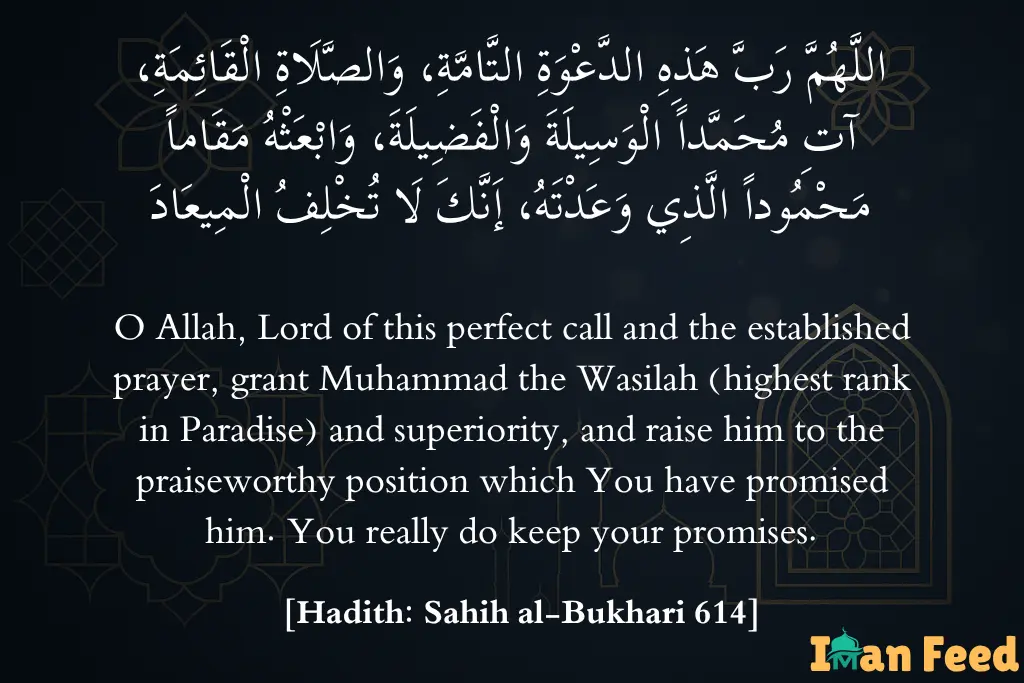
اللَّهُمَّ رَبَّ هَذِهِ الدَّعْوَةِ التَّامَّةِ، وَالصَّلَاةِ الْقَائِمَةِ، آتِ مُحَمَّداً الْوَسِيلَةَ وَالْفَضِيلَةَ، وَابْعَثْهُ مَقَاماً مَحْمُوداً الَّذِي وَعَدْتَهُ، إَنَّكَ لَا تُخْلِفُ الْمِيعَادَ
Transliteration: Allahumma Rabba haadhihi ad-dawati-taammah was-salaati al-qaaimah, aati Muhammadan al-waseelata wal-fadeelah, wab’athhu maqaaman mahmoodan alladhee wa’adtahu, innaka laa tukhlif ul-mee’aad
English Translation: O Allah, Lord of this perfect call and the established prayer, grant Muhammad the Wasilah (highest rank in Paradise) and superiority, and raise him to the praiseworthy position which You have promised him. You really do keep your promises.
This dua is found in Sahih al-Bukhari 614. The Prophet Muhammad (peace be upon him) vowed to intercede for anybody who recites it after hearing the Adhan on the Day of Resurrection.
More Dua After responding to the adhan
It is suggested to say the following when the Mu’adhdhin (prayer caller) says it:
Arabic:
وَأَنَا أَشْهَدُ أَنْ لَا إِلَهَ إِلَّا اللهُ وَحْدَهُ لَا شَرِيكَ لَهُ وَأَنَّ مُحَمَّداً عَبْدُهُ وَرَسُولُهُ، رَضِيتُ بِاللهِ رَبَّاً وَبِمُحَمَّدٍ رَسُولاً وَبِالإِسْلاَمِ دِيناً
Transliteration: Wa anaa ash-hadu a laa ilaaha illallaahu wahdahu laa shareeka lahu wa anna Muhammadan abduhu wa rasooluh, radheetu billaahi rabban wa bi-Muhammadin rasoolan wa bil-islaami deenan
English Translation: And I bear witness that there is no deity worthy of worship except Allah alone, Who has no partner, and that Muhammad is His servant and Messenger. I am happy with Allah as my Lord, Muhammad as my Messenger, and Islam as my faith.
Source: This supplication is found in Sahih Muslim 386, where the Prophet (peace be upon him) stated that whoever recites this after hearing the Mu’adhdhin will have their sins forgiven.

Comprehensive Duas for a Stronger Spiritual Connection
Arabic: Dua for Ramadan Blessings
اللَّهُمَّ بَارِكْ لَنَا فِي رَمَضَانَ وَاجْعَلْنَا مِنَ الْمُتَقِينَ
Transliteration: Allahumma barik lana fi Ramadan waj’alna min al-muttaqin
English Translation: O Allah, bless us in Ramadan and make us among the righteous.

Arabic: The Universal Dua from the Quran
رَبَّنَا آتِنَا فِي الدُّنْيَا حَسَنَةً وَفِي الْآخِرَةِ حَسَنَةً وَقِنَا عَذَابَ النَّارِ
Transliteration: Rabbana atina fid-dunya hasanatan wa fil-akhirati hasanatan waqina adhaban-nar
English Translation: Our Lord, give us good in this world and good in the Hereafter, and protect us from the punishment of the Fire.
Source: Surah Al-Baqarah 2:201 of the Quran is where this strong prayer comes from.

During the Adhan, you should act properly.
Responding to the Mu’adhdhin: The Sunnah is to repeat each phrase of the Adhan after the Mu’adhdhin, except for “Hayya ‘ala as-salah” (Come to prayer) and “Hayya ‘ala al-falah” (Come to success), when you should say “La hawla wa la quwwata illa billah” (There is no power except with Allah).
Timing:
If you are reading the Quran when the Adhan starts, stop reading to answer the call and then start again. If you’re in the restroom, wait until you’re done before answering the Adhan.
The Promise of Intercession: Sahih Muslim 384 says that the Prophet (peace be upon him) said that anyone who repeats the Adhan, sends blessings upon him, and requests Allah to give him Al-Wasilah will be sure to have his intercession on the Day of Judgment.
The Holy Time Between Adhan and Iqamah
People believe that prayers are never turned down during the interval between the Adhan and Iqamah (the second call to prayer). This is a great chance to make personal duas, ask for forgiveness, and make meaningful pleas to Allah. The Prophet (peace be upon him) made it clear that prayers would be accepted throughout this holy time.
Benefits of Consistent Practice: Reciting these prayers after Adhan on a regular basis has several spiritual benefits, including as the promise of the Prophet’s intercession, forgiveness of sins, and the acceptance of personal pleas. This activity helps you feel closer to Allah and reminds you that it’s time to pray.
These prayers are beautiful not just because of their spiritual meaning, but also because every Muslim can use them, no matter how much Arabic they know. By making these duas a part of their everyday lives, believers can turn the simple act of hearing the Adhan into a powerful moment of worship and spiritual growth.