Last 3 Ayat of Surah Al-Hashr: Translation, Meaning, and Benefits
Surah Al-Hashr, the 59th chapter of the Quran, is a profound surah revealed in Medina, comprising 24 verses. Its concluding three verses (Ayat 22–24) are especially revered for their spiritual depth, as they encapsulate Allah’s majestic attributes and names, offering immense blessings to those who recite them. Known for their concentration of Allah’s Asma ul-Husna (Beautiful Names), these verses hold a special place in Islamic worship. This SEO-optimized article explores the translation, transliteration, significance, and benefits of the last three ayat of Surah Al-Hashr, supported by authentic Hadith and scholarly insights.
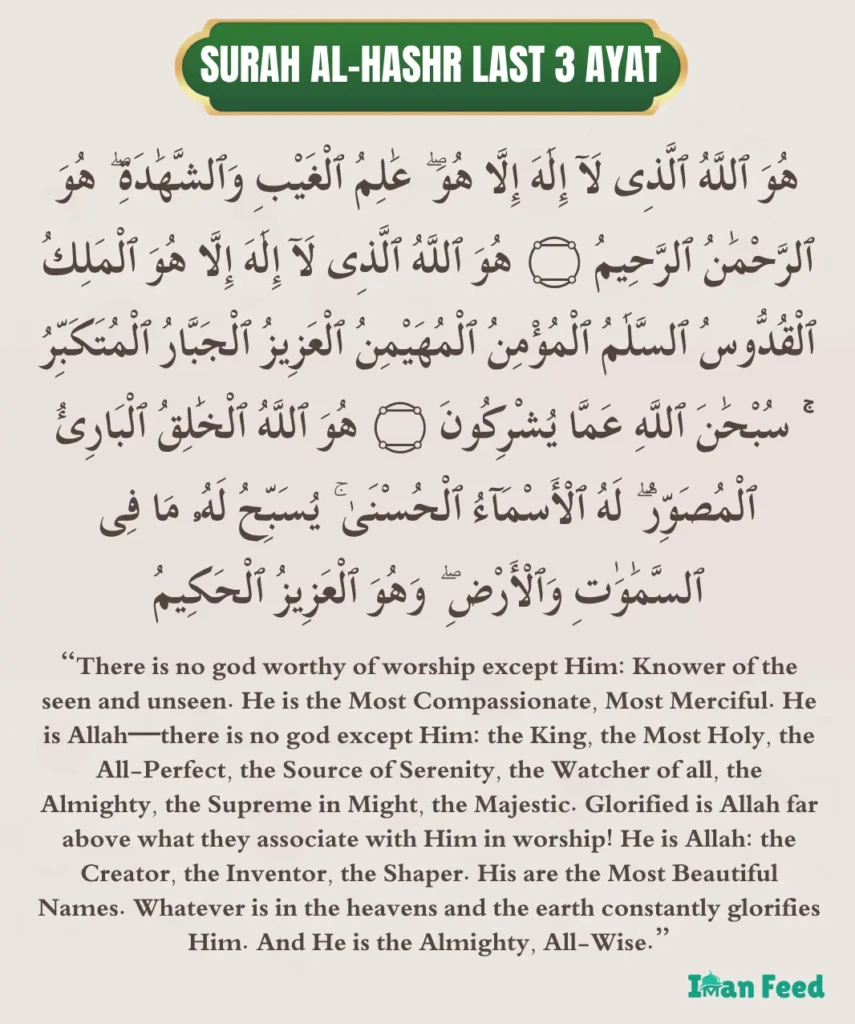
Last 3 Ayat of Surah Al-Hashr
- Ayah 22:
هُوَ ٱللَّهُ ٱلَّذِى لَآ إِلَٰهَ إِلَّا هُوَ ۖ عَٰلِمُ ٱلْغَيْبِ وَٱلشَّهَٰدَةِ ۖ هُوَ ٱلرَّحْمَٰنُ ٱلرَّحِيمُ - Ayah 23:
هُوَ ٱللَّهُ ٱلَّذِى لَآ إِلَٰهَ إِلَّا هُوَ ٱلْمَلِكُ ٱلْقُدُّوسُ ٱلسَّلَٰمُ ٱلْمُؤْمِنُ ٱلْمُهَيْمِنُ ٱلْعَزِيزُ ٱلْجَبَّارُ ٱلْمُتَكَبِّرُ ۚ سُبْحَٰنَ ٱللَّهِ عَمَّا يُشْرِكُونَ - Ayah 24:
هُوَ ٱللَّهُ ٱلْخَٰلِقُ ٱلْبَارِئُ ٱلْمُصَوِّرُ ۖ لَهُ ٱلْأَسْمَآءُ ٱلْحُسْنَىٰ ۚ يُسَبِّحُ لَهُۥ مَا فِى ٱلسَّمَٰوَٰتِ وَٱلْأَرْضِ ۖ وَهُوَ ٱلْعَزِيزُ ٱلْحَكِيمُ
Translation of the Last 3 Ayat of Surah Al-Hashr
The last three verses of Surah Al-Hashr (59:22–24) beautifully describe Allah’s divine attributes and reinforce the concept of Tawheed (the oneness of Allah). Below is their translation in English, based on Dr. Mustafa Khattab’s The Clear Quran:
- Ayah 22:
“He is Allah—there is no god worthy of worship except Him: Knower of the seen and unseen. He is the Most Compassionate, Most Merciful.” - Ayah 23:
“He is Allah—there is no god except Him: the King, the Most Holy, the All-Perfect, the Source of Serenity, the Watcher of all, the Almighty, the Supreme in Might, the Majestic. Glorified is Allah far above what they associate with Him in worship!” - Ayah 24:
“He is Allah: the Creator, the Inventor, the Shaper. His are the Most Beautiful Names. Whatever is in the heavens and the earth constantly glorifies Him. And He is the Almighty, All-Wise.”
These verses emphasize Allah’s sovereignty, mercy, and creative power, affirming that He alone is worthy of worship and free from any partners or associates.
Transliteration of the Last 3 Ayat
For non-Arabic speakers, the transliteration helps with pronunciation and recitation. Here is the Roman transliteration of Surah Al-Hashr’s last three ayat:
- Ayah 22:
Huwal-laahul-lazee laaa ilaaha illaa Huwa ‘Aalimul-Ghaibi wash-shahaada; Huwar-Rahmaanur-Raheem. - Ayah 23:
Huwal-laahul-lazee laaa ilaaha illaa Huwal-Malikul Quddoosus-Salaamul Muminul Muhaiminul-‘Azeezul Jabbaarul-Mutakabbir; Subhaanal-laahi ‘ammaa yushrikoon. - Ayah 24:
Huwal Laahul Khaaliqul Baari’ul Musawwir; lahul Asmaaa’ul Husnaa; yusabbihu lahoo maa fis-samaawaati wal-ardi wa Huwal ‘Azeezul Hakeem.
Reciting these verses in Arabic is highly recommended, as the Quran’s original language carries spiritual potency and fosters a deeper connection with Allah.
Significance of the Last 3 Ayat
The last three ayat of Surah Al-Hashr are a treasure trove of divine wisdom, focusing on:
- Tawheed: The verses repeatedly affirm that “there is no god but He,” reinforcing the core Islamic belief in Allah’s oneness.
- Asma ul-Husna: These ayat contain 15 of Allah’s 99 Beautiful Names, the highest density in the Quran, including Ar-Rahman (The Most Compassionate), Al-Malik (The King), and Al-Khaliq (The Creator). Memorizing and reflecting on these names deepens one’s understanding of Allah’s attributes.
- Universal Praise: The verses highlight that everything in the heavens and earth glorifies Allah, reminding believers of His universal dominion and majesty.
- Spiritual Reflection: Reciting these verses encourages humility, gratitude, and a constant remembrance of Allah, fostering a mindful and purposeful life.
Benefits of Reciting the Last 3 Ayat of Surah Al-Hashr
The spiritual and worldly benefits of reciting these verses are well-documented in Islamic tradition, particularly through Hadith. While some narrations, such as the one attributed to Ma’qil ibn Yasar in Sunan Tirmidhi (Hadith 2922), have been classified as weak by scholars like Al-Albani, others emphasize their virtues. Below are the key benefits:
- Protection from Harm:
Reciting these verses, especially after saying “A’udhu billahis Sami’il ‘Alim minash shaytanir rajim” (I seek refuge with Allah, the All-Hearing, All-Knowing, from the accursed Shaytan), is believed to offer protection from calamities, the evil eye, jinn, and Shaytan. - Angelic Blessings:
A Hadith states that reciting these verses in the morning or evening prompts Allah to appoint 70,000 angels to pray for the reciter until the evening or morning, respectively. If the reciter dies on that day, they are granted the status of a martyr. However, this Hadith’s authenticity is debated, and Muslims are encouraged to rely on authentic supplications for morning and evening. - Forgiveness of Sins:
Regular recitation is said to seek Allah’s forgiveness, purify intentions, and cleanse the heart, fostering spiritual growth. - Guidance and Tranquility:
These verses guide believers to the straight path and instill peace of mind, reminding them of Allah’s ever-present mercy and support. - Increased Sustenance and Blessings:
Recitation is believed to attract divine blessings, including an increase in wealth and spiritual rewards. - Strengthened Faith:
Reflecting on Allah’s names and attributes reinforces belief in His omnipotence, encouraging steadfastness in faith. - Physical Benefits:
Some sources suggest that reciting these verses may alleviate ailments like headaches, though this is anecdotal and requires personal experience to verify.
Hadith on the Virtues of Recitation
A notable Hadith, narrated by Ma’qil ibn Yasar (R.A.), states:
“Whoever says three times when he gets up in the morning: ‘A’udhu billahis Sami’il ‘Alim minash shaytanir rajim’ and recites the last three verses of Surah Al-Hashr, Allah appoints seventy thousand angels to send blessings upon him until evening. If he dies on that day, he dies a martyr, and whoever reaches the evening holds the same status.” (Tirmidhi 2922)
However, scholars like Al-Albani have classified this Hadith as da’if (weak). Muslims are advised to focus on authentic supplications while still valuing the spiritual benefits of these verses.
How to Incorporate These Verses into Daily Life
To maximize the blessings of the last three ayat of Surah Al-Hashr, consider the following practices:
- Morning and Evening Recitation: Recite the verses after Fajr (dawn) and Maghrib (sunset) prayers, ideally preceded by seeking refuge from Shaytan.
- Memorization: Learn the Arabic text and its transliteration to recite accurately and reflect on Allah’s names.
- Reflection: Contemplate the meanings of Allah’s attributes to deepen your connection with Him.
- Teach Others: Share the virtues with family and friends to spread the blessings.
- Daily Dhikr: Include these verses in your daily supplications for protection and spiritual growth.
Historical Context of Surah Al-Hashr
Surah Al-Hashr, meaning “The Exile,” was revealed concerning the expulsion of the Jewish Banu Nadir tribe from Medina due to their betrayal of the Prophet Muhammad (PBUH). The surah’s themes of divine justice, Tawheed, and Allah’s support for believers are reflected in its concluding verses, which emphasize His supreme authority.
Conclusion
The last three ayat of Surah Al-Hashr (59:22–24) are a powerful reminder of Allah’s oneness, majesty, and mercy. Their recitation offers spiritual protection, forgiveness, and tranquility, while their meanings inspire humility and faith. By incorporating these verses into daily life, Muslims can draw closer to Allah, strengthen their faith, and experience the profound blessings promised in Islamic tradition. Recite them with sincerity, reflect on their meanings, and teach others to share in their divine rewards.
Call to Action: Start reciting the last three ayat of Surah Al-Hashr today after Fajr and Maghrib prayers. Memorize Allah’s Beautiful Names and share this article with others to spread the blessings. For more Quranic insights, explore our related articles on Surah Baqarah and other powerful supplications.